
Packing and Transit Protection for Coated Steel Coil: How to Avoid Scratches and Rust on Arrival
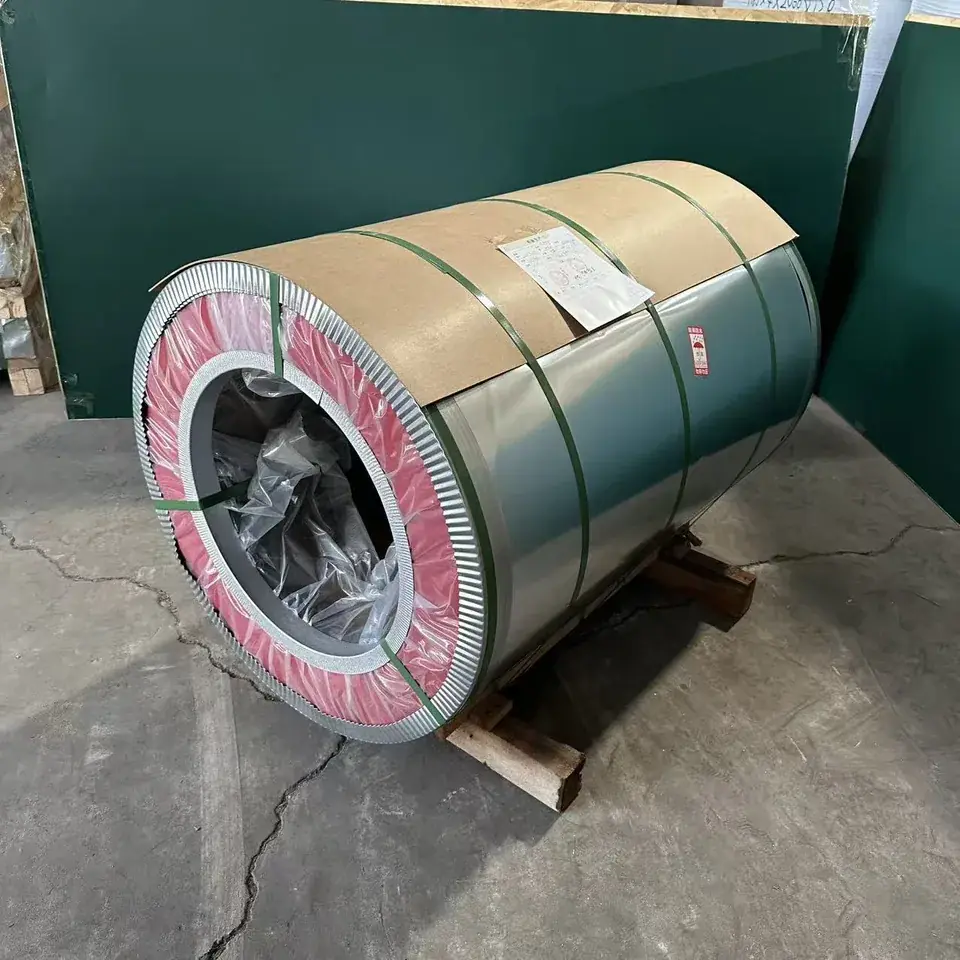
Most transit claims on writing-surface steel are not about the coating formula. They are about packing: a forklift tine that kissed an unprotected coil eye, a wet cut edge that rusted under wrap, or sheets that rubbed face-to-face for three weeks at sea. By the time the container opens in Europe, the damage is already paid for.
The practical answer is to specify export packing in the PO — not after arrival. Ask for kraft wrap with eye and edge protection on coils, paper interleaving and corner protectors on cut sheets, wooden cradles or export pallets with PET strapping, and pre-shipment photos or video before the door is sealed. Third-party inspection (SGS / BV / your own QC) is welcome at our Bazhou plant. That short list prevents most scratches and rust complaints we see.
Why coated whiteboard film scratches and dents easily
A writing-surface coil is thin steel with a cured paint film on top. Our whiteboard and chalkboard builds sit at 22–24 µm total dry film — enough for erase performance, not enough to shrug off abrasion. White gloss is especially unforgiving: a hairline scratch catches light and stays visible after framing. Matte green and black hide fine marks better, but a dent from a strap or a crushed corner still shows on the finished board.
Damage usually starts at three points:
- Coil eye and outer edge — forklift contact, sling pressure, or another coil rolling into an unprotected eye.
- Face-to-face sheet rub — cut sheets stacked without paper interleaving grind coating during road and sea vibration.
- Strap and corner crush — PET strap without edge protectors, or pallet corners that take the full stack weight.
None of these are “coating defects.” They are packing and handling defects that a clear PO can block before loading. For how scratched surfaces later show up as erase problems, see won't write, won't erase.
Moisture, cut edges and rust under the wrap
Rust on coated coil rarely starts in the middle of the painted face. It starts where bare steel is exposed: sheared edges, slit edges, and any place wrap was torn so condensation can sit against metal. A long sea voyage or a damp warehouse overnight is enough if the pack was loose or the wrap was punctured.
What actually helps, based on how we pack at Bazhou:
- Kraft-paper wrap on the coil body, with the eye and edges protected so water and dust do not sit on open steel.
- VCI paper interleaved on standard export coil packing (eye-to-sky) — vapour corrosion inhibitor paper slows flash rust where moisture still finds a path.
- Intact wrap until receiving — do not strip packing in the rain on the quay; open indoors and keep interleaving until the sheet goes on the line.
We do not invent a proprietary “anti-rust brand” for this post. The controls that matter are wrap integrity, edge protection, VCI interleaving on coil, and dry receiving. If your route is a long overland haul rather than sea, packing still has to handle rain and road dust — see shipping to Russia by road for that logistics context; this article stays on packing itself.
Coil packing: kraft, eye / edge protection, cradle and strap
Our homepage packing line for coil is short on purpose: kraft-paper wrapped, eye and edges protected, PET-strapped on wooden cradles — about 2 t per coil. Product pages also describe eye-to-sky coil on a wooden pallet with VCI paper interleaved. In practice that means:
- The painted outer wrap is covered so sling and fork contact hit kraft and protectors, not bare coating.
- The eye (bore) and outer edges get dedicated protection — the two places forklifts and neighbouring coils damage first.
- PET strapping holds the pack to a wooden cradle (or wooden pallet, eye-to-sky) so the coil cannot roll in the container.
- Typical coil weight is about 2 t — one forklift lift when the cradle is sound.
Buyers who take full coil still need to plan in-plant handling: once the wrap comes off for slitting, the surface is exposed again. If you prefer sheets that go straight to framing, compare formats in coil or cut-to-size.
Cut-to-size sheets: interleaving, corners and export pallets
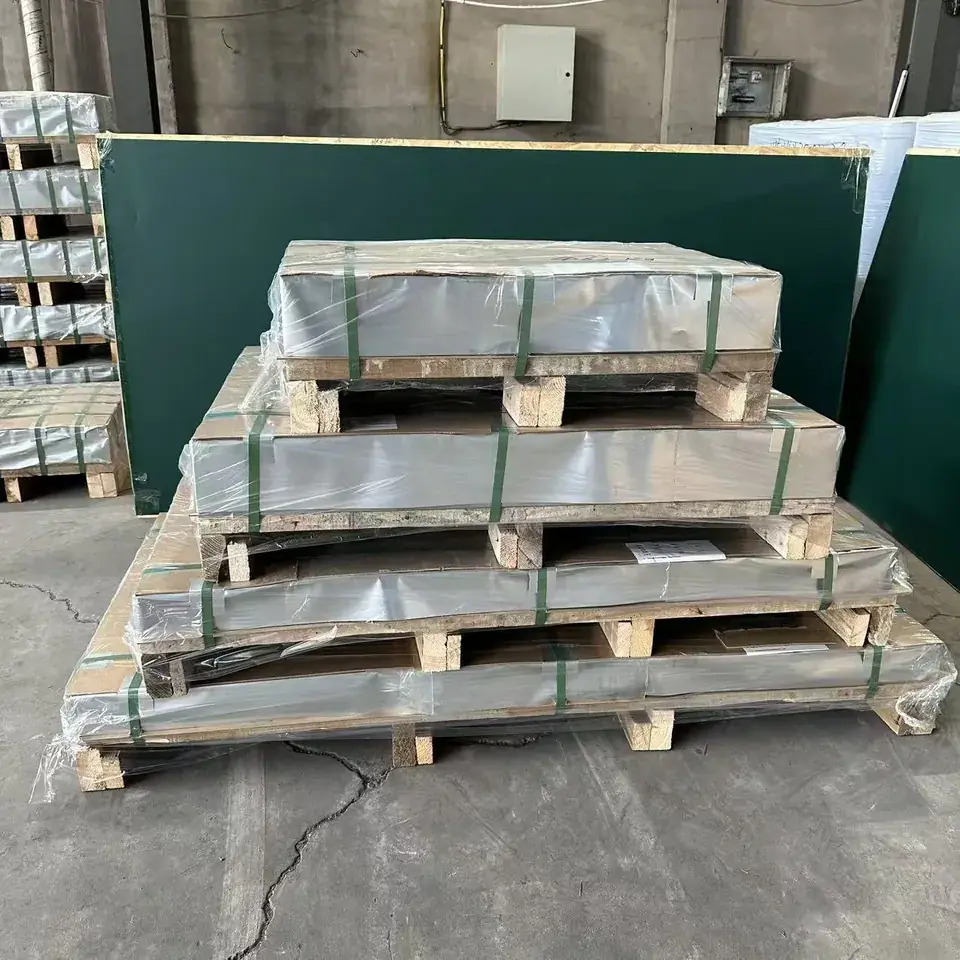
Cut sheets are sheared to your board dimensions, then paper-interleaved, stacked on export pallets with corner protection and strapping. That stack is the difference between a clean face and a scuffed one:
- Paper between every sheet stops coating-to-coating rub under vibration.
- Corner / edge protectors take strap pressure and forklift knocks so the top and bottom sheets do not crease.
- Export pallet + PET strap keeps the stack square for container stowage and for a single forklift lift at your door.
A typical 2 t MOQ leaves as two or three pallets in the 800–900 kg range each — see what two tons buys you. Ask for the same packing language whether the order is whiteboard, green chalkboard or black chalkboard; only the coating colour changes, not the export pack.
Container stowage and dunnage (buyer-side checks)
Even good factory packing fails if the container is loaded soft. Useful checks — whether you book the freight or we load FOB Tianjin:
- Coils sit on cradles / pallets, not bare floor; straps or chocks stop rolling.
- Sheet pallets are block-stowed; empty space is filled so stacks cannot walk.
- No wet timber or open vents dripping onto kraft wrap.
- Labels and coil / pallet IDs face the door where photos can still read them.
We document packing, labelling and loading with pre-shipment photos and video before the door is sealed. That is on our quality control page — use it. If you want a third party present, SGS, BV or your own inspector is welcome; we book access, not excuses.
What to write into the PO
Paste language like this into the packing clause. Short beats vague:
- Coil: kraft-paper wrap; eye and edge protectors; PET-strapped on wooden cradle (or eye-to-sky on wooden pallet); VCI paper interleaved; about 2 t per coil.
- Cut sheets: paper-interleaved; corner / edge protectors; strapped on export pallets.
- Evidence: export packing photos (and video if available) before loading; packing list with coil / pallet IDs.
- Inspection: SGS / BV / buyer QC welcome before shipment.
- Documents: MTC with every coil; keep wrap intact until indoor receiving.
MOQ remains 2 t per order. Lead time is typically 25 days after deposit, FOB Tianjin. Free A4 samples are available if you want to check surface before the first container.
Receiving inspection checklist
When the truck or container opens, walk this list before you sign the clean receipt:
- Count pallets / coils against the packing list; photograph labels and seal numbers.
- Check kraft wrap and strapping: tears, wet patches, crushed corners, missing edge protectors.
- For coils: inspect eye and outer edge protectors before removing wrap.
- For sheets: confirm paper interleaving is still present; lift one top sheet and look for rub marks.
- Open one pack indoors; look at cut edges for flash rust before the stack goes into store.
- Hold a sheet under your shop light for scratch bands that will show after framing.
- If anything looks wrong, photograph in place and contact us with the coil / pallet ID before cutting the rest.
A free A4 sample will not prove packing — only a full pack photo set will — but it still proves the writing surface before you commit tonnage. Use our five-minute sample test on the coating, and use the checklist above on the arrival.
Ready to lock packing into the next order? Request a Quote for whiteboard surface coil or cut sheets — or ask for a free A4 sample first.
*— Yueyang Technology, Bazhou, Hebei. Write to us — David Hu, General Manager.*