
Why Whiteboard Panels Arrive Damaged — Real Damage Rates and How to Make a Claim Stick
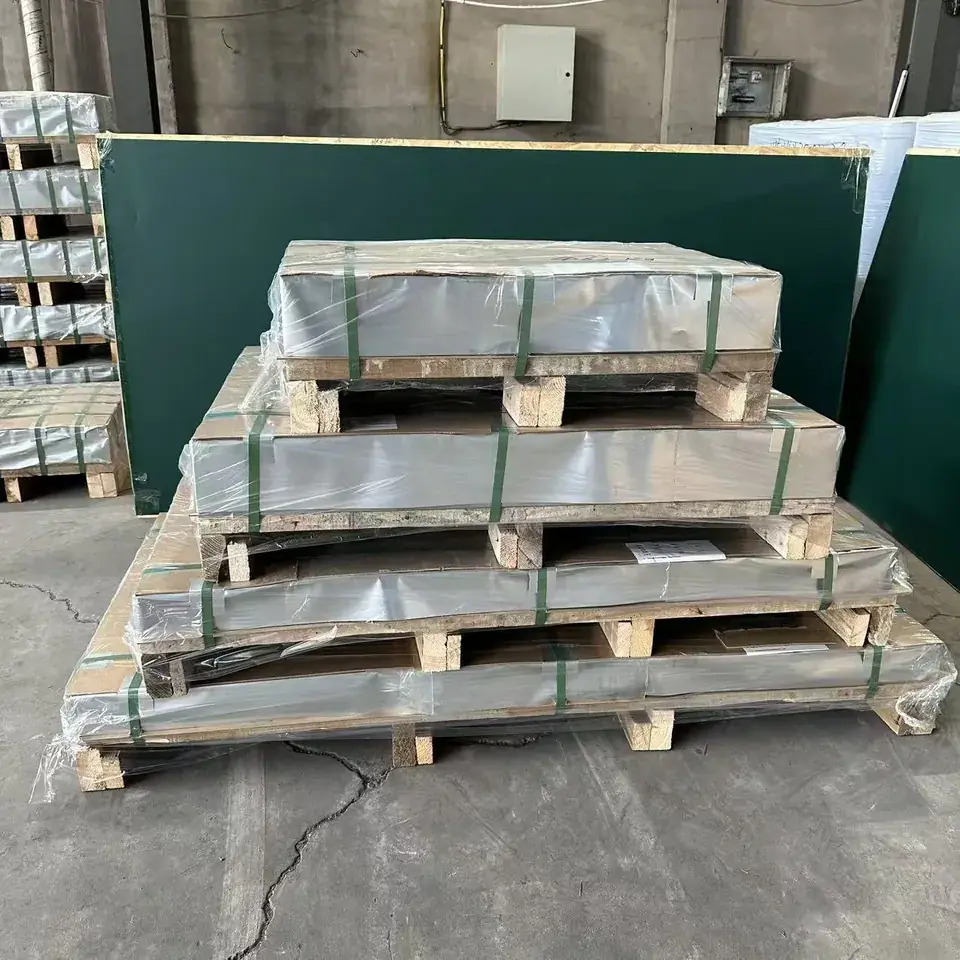
A buyer in Rotterdam once sent us nine photographs of a delivery: four panels with crushed corners, two with a grey band across the face where a steel strap had bitten in, and one with white powder blooming along the cut edge. His message was short — "this is 7% of the order, what are you going to do?" Fair question. What followed was three weeks of emails that could have been two days, because the cause was obvious but the documentation was not. Transit damage on coated steel is one of the few quality topics where the physics are simple and the argument is almost always procedural. So let us walk through what actually breaks, what a normal damage rate looks like, and how to build a claim file that a surveyor will accept instead of reject.
Four ways panels get damaged, in order of frequency
Across the containers we ship, damage concentrates in four patterns. Corner deformation is the most common by far — roughly two thirds of the claims we see. A 1.2 × 2.4 m panel at 0.4 mm weighs about 9 kg, and a 30-panel pallet is a 270 kg slab with four unprotected corners. Any impact during forklift handling or container loading transfers straight into the corner bundle, and the panel underneath takes a crease that no amount of straightening will remove. Strap compression is second: steel or PET strapping tensioned over a bare panel edge leaves a permanent line, and if the strap sits over the coated face rather than the edge protector, that line is a visible defect across the writing surface. Pallet overhang — panels wider than the pallet deck by even 20 mm — turns the panel edge into the load-bearing point when pallets are stacked two or three high, and the bottom pallet bows. Moisture and white rust we will treat separately below, because it is a different failure with a different fix.
What a normal damage rate actually is
Anyone who tells you zero damage is either shipping air or not counting. Our own figures over the last two years sit around 0.3–0.5% of panels on full-container loads with proper edge protection, and 1–2% when a buyer insists on loose-loaded mixed pallets or LCL consolidation, where the cargo is handled by three or four different crews before it reaches the port. If your supplier's contract says "damage rate below 0.1%", read the definition — most such clauses exclude "minor cosmetic marks", which is precisely what a strap line is. The honest conversation is not about hitting zero; it is about agreeing in advance what counts as damage, who inspects, and what the remedy is per panel. A 1% damage allowance on a 500-panel order is five panels — worth arguing over, not worth a lawsuit.
Packing decisions that move the number
Three things do most of the work. First, corner protection: five-layer corrugated angle pieces on all four vertical edges, not just the two that face outward, because the inward-facing corners are the ones a forklift mast hits when the pallet is pushed rather than lifted. Second, strapping over protection, never over coating: straps should pass over the corner angles and be tensioned to hold, not to crush — 400–600 N is enough for a 30-panel stack; a hand-tensioned steel strap can easily reach three times that and leaves a mark every time. Third, pallet footprint matched to panel size, with panels never overhanging the deck, and a top and bottom board so the stack is a box rather than a pile. None of this is expensive — it adds a few dollars per pallet — but it is the difference between 0.3% and 2%.
White rust is a damage claim too
The failure that surprises buyers most is not mechanical. Coated panels shipped in a closed container cross climate zones, and a container interior can swing from 25 °C by day to 12 °C at night with relative humidity above 70%. That cycle condenses water on the coldest steel surfaces — usually the cut edges and the outer panels — and zinc or zinc-aluminium coating reacts within days, leaving white or grey corrosion product. It looks like a manufacturing defect and gets claimed as one, but it is a packaging and voyage problem. Two mitigations work: desiccant bags sized to the container volume (we use 1 kg per 8–10 m³ for long-haul routes) and, more importantly, not shipping freshly cut panels with unprotected edges — a passivation or thin oil film on cut edges buys weeks of margin. If a supplier ships bare cut edges into a humid trade lane without desiccant, white rust is a matter of when.
Building a claim file that survives inspection
Insurance and carrier liability both turn on documentation timing, and this is where most claims die.
- Photograph at devanning, before anything is moved. Wide shot of the container interior, then the pallet, then the individual panel with a tape measure in frame. Nine phone photos taken after the pallet was broken down prove nothing about where the damage happened.
- Note the damage on the delivery receipt. "Signed clean" is the single most common reason a carrier rejects a claim. If the driver will not wait, write "subject to inspection" and photograph the receipt.
- Notify in writing within the contractual window. Under most marine cargo policies and carrier conventions, apparent damage needs notice within three days of delivery and a formal claim within 30 to 60 days. A polite email on day two costs nothing; a claim on day forty is a negotiation, not a right.
- State the remedy in panels and in money. Surveyors respond to a schedule: panel count, size, coating, unit price, replacement or credit. "Please advise" gets you a question back.
Where we are honestly limited
We cannot control what happens after the container leaves Tianjin, and we do not pretend our packing is immune to a dropped container or a careless grab at a transhipment port. What we can do is pack to a spec we can defend, photograph every pallet before loading, and keep the loading sequence on file — because when a claim does arrive, those photographs are what distinguishes "damaged before loading" from "damaged after". We have also lost claims ourselves as a buyer of raw coil, so we know how the other side reads a file.
If you are specifying panels for a project where a damaged delivery means a delayed installation, tell us the route and the season at enquiry stage. We will quote the packing that fits the voyage — desiccant, edge protection, pallet height — rather than the cheapest pallet that clears the port. Start from the packing and loading page or send us the route and panel list, and we will come back with a packing spec and a realistic damage expectation in writing.
*— Yueyang Technology, Bazhou, Hebei. Write to us — David Hu, General Manager.*