
Why a New Whiteboard Smells: VOC, Curing and the Questions Buyers Should Ask
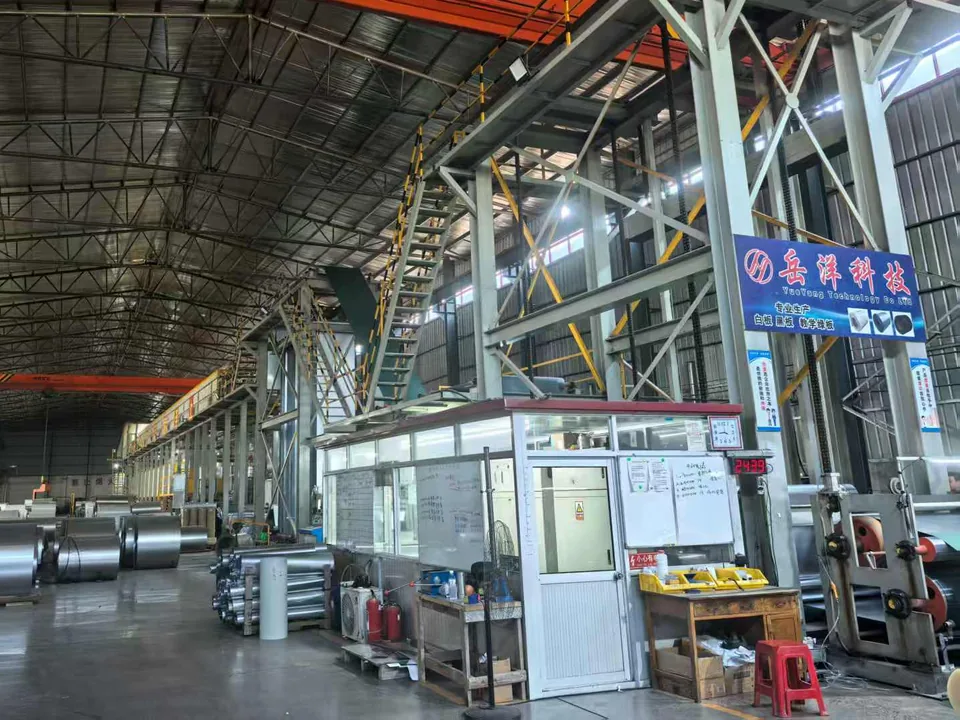
Every few weeks a customer emails us the same question, sometimes apologetically: the board they unwrapped has a smell — is it toxic, and will it go away? The short answer from inside the factory is that the smell is real, it has a specific technical cause, and it is almost always temporary. But "almost always" is doing some work in that sentence, so here is the full picture, including the cases where a buyer should push back on a supplier.
Where the smell physically comes from
A coated steel whiteboard panel is made on a coil coating line: the steel strip is cleaned, pretreated, primed, topcoated, and then passed through a curing oven in a single continuous pass. The topcoat chemistry is a polyester or PET system carried in organic solvents, and the oven removes those solvents by driving the panel to a peak metal temperature of roughly 200–230 °C for 20–40 seconds. Get the temperature and dwell right, and the solvent load leaves with the exhaust air; what stays in the panel is the cured polymer film. Get them wrong — oven too short, line speed pushed up to chase tonnage, coating weight applied too heavy — and measurable residual solvent rides out of the factory inside the finished coil. That residue is the smell you notice when you unroll a fresh panel or open a crate of new boards. It is also why the intensity varies between batches and between suppliers: two mills can both sell "whiteboard steel" and ship panels with very different residual solvent levels.
The second source nobody mentions: the protective film
There is a second contributor that has nothing to do with the coating. Panels ship laminated with a PE protective film, and that film's pressure-sensitive adhesive is itself a mild VOC source. Customers sometimes report that a board smelled for the first week, then stopped — and the reason is usually the film and its adhesive off-gassing in a closed room, not the writing surface at all. This matters when you are evaluating complaints: a board that smells strongly *under* the film but not after removal points to packaging; a board that smells from the bare coating after the film is gone points to the cure. Different causes, different conversations with different departments.
How long it lasts, honestly
For a properly cured panel, the residual solvent from the coating is largely gone within days, and the classic recommendation — store or hang the boards in a ventilated room for one to two weeks before a classroom or office goes into daily use — is more than generous. Most of what remains after that is the protective film adhesive, which stops mattering as soon as the film is peeled at installation. We will say the uncomfortable part out loud: panels that leave the factory three or four weeks after production almost never generate complaints, and panels installed straight off a just-delivered pallet sometimes do. Freshness is a virtue in food, not necessarily in coated steel. If your project schedule allows it, ordering so that panels have a few weeks of warehouse time before installation is a free, very effective mitigation — and a supplier who tells you "zero smell, day one" is selling you a claim nobody in this industry can honestly make.
What the numbers and standards actually say
There is no single global VOC certificate for whiteboard steel, which is exactly why this topic generates confusion. In practice, buyers in different markets reference different frameworks: schools and public tenders in Europe increasingly ask for evidence under schemes like the French A+ label or German AgBB evaluation for interior products; Chinese buyers work with GB 18582 limits for interior coatings; and many distributors simply commission a third-party chamber test measuring TVOC emissions after 24 and 72 hours. We have supplied against all three patterns, and the practical advice is this: do not ask a supplier "is it VOC free" — nobody can answer yes. Ask instead whether they can provide a third-party emission test on the coated panel, with the test method named. A mill that cures properly and controls its coating suppliers will have this document or will get it done in a few weeks; a mill that cannot produce any emission data is telling you something about how it manages its process.
Three questions to put to your surface supplier
- What is your peak metal temperature and dwell time in the topcoat oven? Any coil coating line knows these two numbers cold. Vague answers here are a red flag for chronically under-cured material — which also erases poorly and fails early, so you are testing more than just smell.
- Can you provide a third-party TVOC emission report on the finished panel, and which method? The method matters more than the number, because numbers are only comparable within one method.
- How old is the material you are shipping me? Not as a quality complaint — freshly produced material is fine — but so you can plan the ventilated storage window before handover to the end user.
Where a buyer is right to worry
Two situations do justify pushing back. First, a smell that persists strongly beyond two or three weeks with the film removed and the room ventilated is not normal for a cured polyester topcoat, and usually indicates a cure problem — the same panels will likely show poor erase performance and early surface wear, so raise it as a quality claim, not a curiosity. Second, boards for nurseries, kindergartens and healthcare projects deserve the third-party emission test as a *pre-shipment* document, not an after-the-fact apology. We would rather run the chamber test before the container loads than argue about a claim afterwards, and any serious supplier should feel the same.
What we do about it
On our line the levers are the ones described above: oven profile held to spec before every production run, coating weight checked per batch, and protective films chosen for low-odour adhesives even where a cheaper film would pass. For orders headed to schools and healthcare buyers we arrange third-party emission testing on the coated panel before shipment, and we tell every customer the same thing in the packing list: peel the film, ventilate the room, let the boards breathe a few days before the first class. If you are specifying boards for a sensitive interior and need the paperwork to match, tell us the target scheme — A+, AgBB, GB or your own tender wording — and we will confirm what we can certify before you commit. Start from the whiteboard surface page, or write to us directly with your project details.
*— Yueyang Technology, Bazhou, Hebei. Write to us — David Hu, General Manager.*