
Ceramic Steel vs. Colour-Coated PPGI: Which Whiteboard Surface Should You Spec?
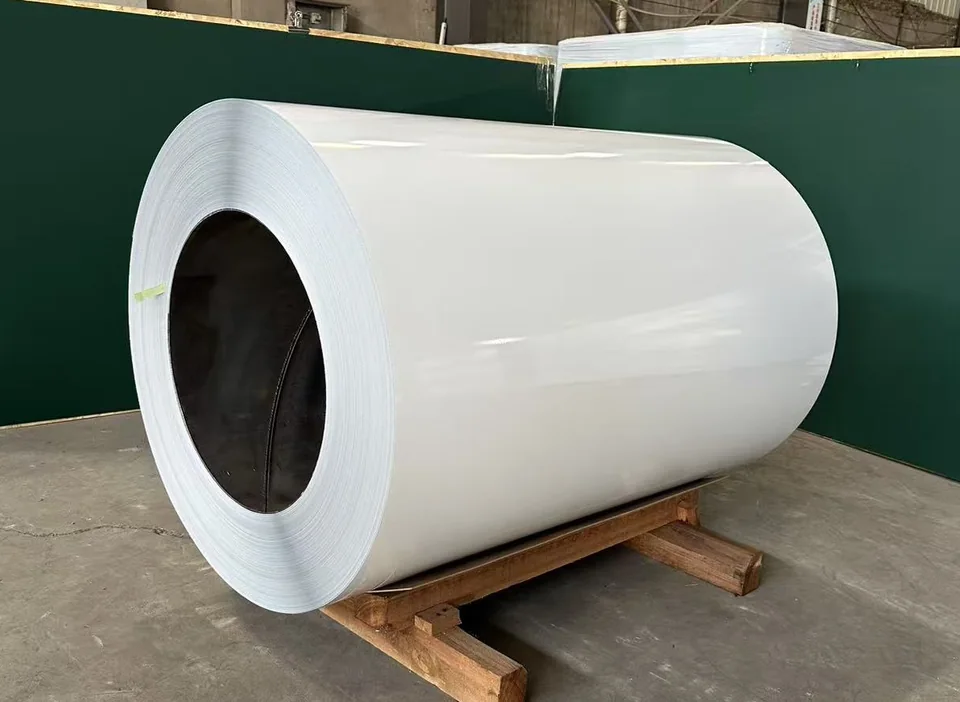
Board makers and importers are usually choosing between two writing faces, not twenty. One is ceramic steel — a glass-ceramic enamel fused onto steel at high temperature. The other is colour-coated writing-surface PPGI: galvanised steel with a primer and a writing top coat, applied and cured on a continuous coating line. They can look similar on a finished board. They are not the same material, and they should not be quoted as if they were.
This is a face-sheet decision for people who specify, import or frame boards. It is not a guide to buying a framed retail board.
What each surface actually is
Ceramic steel (also called vitreous enamel or porcelain enamel steel) starts as a steel sheet. A glass frit is applied and then fired until it fuses into a hard, glassy layer. That layer is the writing surface. It is made by specialist enamel plants, not by a colour-coating line.
Colour-coated writing-surface PPGI is pre-painted galvanised steel. On our line the system is a primer plus a writing top coat, baked in one continuous pass, with a total dry film of 22–24 µm. The steel core is what makes the sheet magnetic. This is the material we produce in Bazhou, as coil or as cut-to-size sheets for board factories — not as a finished framed board.
Cost
Ceramic face material sits in a premium bracket. We will not put a multiplier on it here, because prices move with thickness, sheet size and the enamel supplier — but as a rule the ceramic face costs substantially more than a writing-surface PPGI sheet of a standard 0.22 mm or 0.25 mm gauge. That difference shows up again in the finished board price, in freight, and in how large a stock a factory can hold.
Writing-surface PPGI is the volume material for most commercial, office and furniture board lines. Our own terms are a 2 t minimum, typically 25 days after deposit, FOB Tianjin, with an MTC on every coil and a free A4 sample if you want to test the surface before the first order.
Fabrication and supply form
This is often the decision that settles the RFQ.
A writing-surface PPGI coil can be slit, sheared and framed on a normal board line. We supply full coils (600–1250 mm width) or cut-to-size sheets, so a factory can run its own cutting or skip it. Edges can be trimmed; sizes can change from one order to the next without a new enamel firing.
Ceramic enamel is a fired glass layer. It does not like being cut, punched or bent after firing. Board makers who use it generally buy prepared sheets — or finished boards — from a specialist enamel supplier. You should not expect to process ceramic steel the way you process a PPGI coil.
If your plant is built around slitting, shearing and framing, PPGI fits the line. If the tender requires an enamelled face and you do not run an enamel process, you are sourcing a different product from a different kind of mill.
Durability and service life
On hardness and abuse, ceramic wins. The fused glass surface resists scratching and aggressive cleaning better than an organic film, which is why it is still specified for some heavy-use institutional jobs and for tenders that name enamel steel in so many words.
The trade-off is brittleness. Enamel can chip if a corner takes a sharp impact. That is a glass failure, not a paint failure, and it is difficult to repair invisibly.
A writing-surface PPGI film is a cured organic coating, not glass. At 22–24 µm total dry film it is built for erase performance, not for impact like a ceramic layer. Specified correctly — a writing top coat, not ordinary construction or appliance PPGI — it should still erase cleanly after years of normal office and commercial use. It will not match ceramic for extreme scratch and chemical resistance. Anyone who tells you the two surfaces have the same service life is selling, not specifying.
When ceramic is the right spec
- The tender or the customer’s standard already says ceramic, vitreous enamel or porcelain enamel steel.
- The board will see unusually heavy daily use, and the buyer will pay for maximum surface hardness.
- You are building a top-of-range line and the ceramic name is part of the offer.
Do not substitute colour-coated PPGI silently on a ceramic tender. If a specification names enamel steel, quote enamel steel, or ask the buyer to change the spec in writing.
When writing-surface PPGI is the right spec
- You are a board maker or importer running volume office, commercial or furniture boards, and you need coil or cut-to-size sheets that your framing line can process.
- Size mix changes often, and you want custom shears without an enamel lead time.
- Material cost, board weight and a 25-day coating-line lead time matter more than ceramic-level hardness.
- You need a magnetic writing surface on a steel core, with a stated coating build and an MTC per coil.
Many school and training boards are also made this way. Some education tenders, especially in Europe, still name ceramic; read the specification before you bid.
What to put on the PO if you choose PPGI
- Surface: writing-surface colour-coated steel (whiteboard PPGI), not construction or appliance PPGI.
- Thickness: 0.22 mm or 0.25 mm as standard; 0.11–0.40 mm on request.
- Coating: primer + writing top coat, 22–24 µm total dry film.
- Coil width: 600–1250 mm, or cut-to-size sheets.
- Zinc: 20–80 g/m² as agreed.
- Documents: MTC with every coil. If the boards go into schools, ask for the safety reports you actually need — our coating has been tested to EN 71-3 and RoHS.
We coat writing-surface PPGI in Bazhou. We do not make ceramic steel. If a drawing calls for ceramic, we will say so rather than quote the wrong face. If writing-surface PPGI is the right spec, request a free A4 sample and run the five-minute test before you commit tonnage.
Ready to spec a writing surface? Request a Quote for whiteboard surface coil or cut sheets — or ask for a free A4 sample first.
*— Yueyang Technology, Bazhou, Hebei. Write to us — David Hu, General Manager.*